💷 Free entry
North Leigh Roman Villa
Free English Heritage site near Witney with one of the finest Roman mosaic floors in England, reached on foot across a field.
✦ We visited
Collecting the key from the farm and walking across the field to find the mosaic gives the visit a quality that a normal heritage site entrance cannot. The mosaic itself is extraordinary for where it is. Go with older children who can carry some historical context, and combine it with Cogges for a good morning.
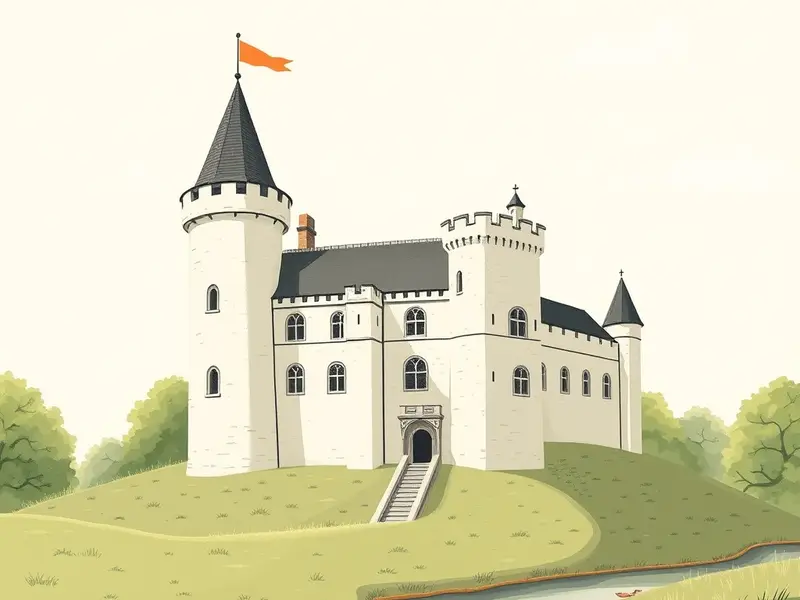
North Leigh Roman Villa occupies a quiet slope above the River Evenlode north of Witney, the remains of a large 4th-century Roman courtyard villa whose foundations stretch across several acres of farmland. Most visitors come for a single room near the north range: a geometric mosaic floor in near-perfect condition, housed under a small protective shelter and widely regarded as one of the finest surviving Roman mosaics in England.
Accessing the mosaic requires a short additional step. A key for the mosaic shelter is available from the adjacent farm before your visit; follow the English Heritage signs from the road and collect it before walking across the field to the villa itself. The path is around five minutes, clearly marked but uneven, and not suitable for pushchairs. What you find at the end of it is a tessellated floor of interlocking geometric panels in black, white and terracotta, filling a space that would have been the heated reception room of a prosperous Romano-British household around AD 360. The scale and condition of the mosaic in this unlikely rural setting make it genuinely arresting.
The wider site shows the foundations of the courtyard layout clearly in the grass, and on a calm day the elevated position — chosen deliberately by the original builders for its prospect over the Evenlode valley — gives the place a quality that more visited Roman sites often lack. English Heritage provides basic interpretation on site, but families who have read a little about Roman villas before visiting will get considerably more from the experience. For children who have studied Romans at school, it provides a vivid, physical connection between classroom learning and an actual place.
The villa is free to visit throughout its season and pairs naturally with Cogges Manor Farm in Witney, a few miles to the south, for a morning that moves between two very different periods of Oxfordshire history.
Good for: history, outdoors. Ages: 5–7, 8–11, 12+.
Good to know
How do you access North Leigh Roman Villa?
A key for the mosaic shelter is available from the adjacent farm; follow the English Heritage signs from the B4022 north of Witney. Collect the key before walking across the field to the villa.
Is North Leigh Roman Villa free?
Yes, the site is managed by English Heritage and entry is free throughout its open season from April to September.
What is the North Leigh mosaic?
A large 4th-century geometric mosaic floor covering much of what would have been the main heated reception room of the Roman villa. It is one of the finest surviving Roman mosaics in England and is in near-perfect condition.